
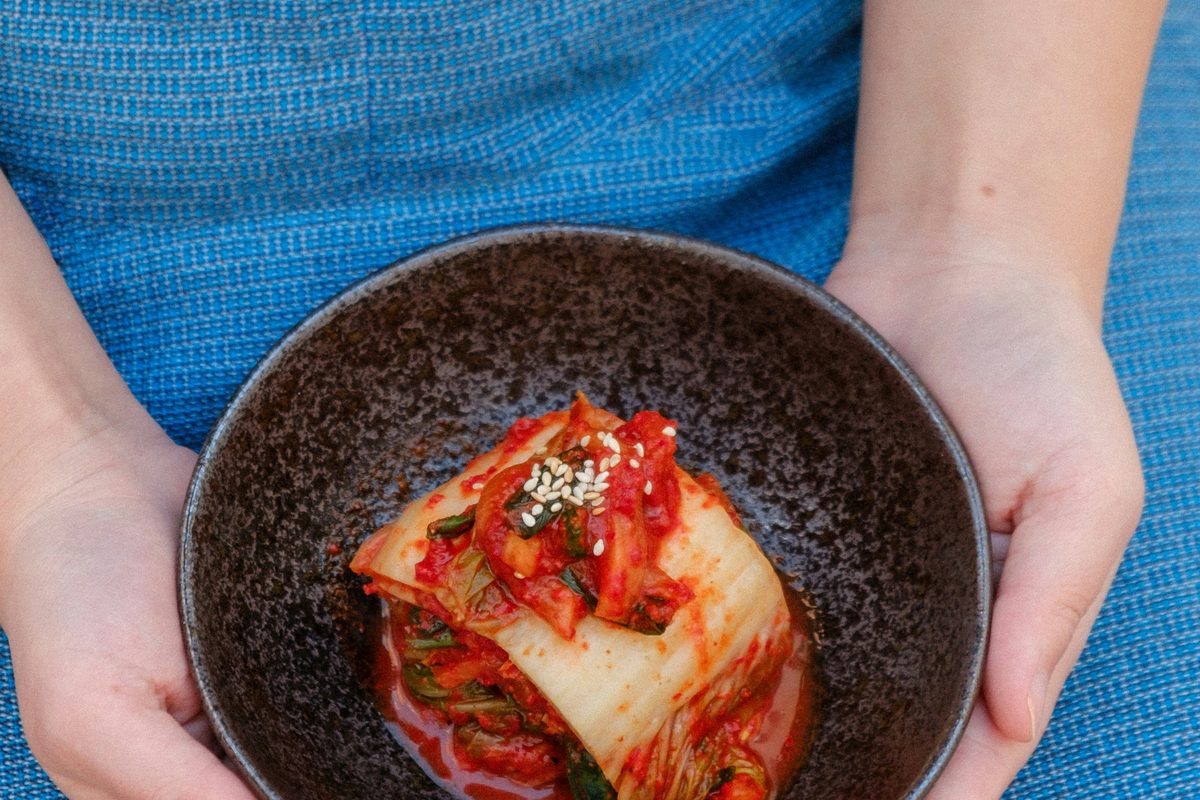
Long before probiotic capsules, people looked after their guts with something much simpler: fermented foods. They're one of the oldest — and tastiest — ways to bring friendly bacteria into your diet.
If you'd like to support your gut through food first, this is a lovely place to start. Here's what counts, and how to ease them in without a fuss.
What counts as a fermented food
Fermented foods are made with the help of live bacteria or yeasts, and many carry those friendly cultures through to your plate. Common ones include:
- Live yoghurt and kefir — among the easiest to start with, and simple to find
- Sauerkraut and kimchi — fermented cabbage, tangy and versatile
- Miso and tempeh — fermented soya, lovely in soups and cooking
- Kombucha — a fizzy fermented tea
- Some traditional cheeses
One thing to look for: "live" or "live cultures" on the label. Products heat-treated or pasteurised after fermenting — or those that sit shelf-stable for months — may have lost most of their living bacteria. Still tasty, just less of the gut benefit.
A quick label tip
For sauerkraut and kimchi, the versions kept in the fridge and marked "raw" or "unpasteurised" usually have more live cultures than the tinned, shelf-stable kind.
How to start without upsetting your stomach
As with fibre, gentle wins. Go from none to a big bowl of kimchi overnight and your gut may protest with wind. Instead:
- Start with a spoonful or a small glass, not a full serving
- Introduce one new food at a time, so you learn what suits you
- Build up slowly over a couple of weeks as your gut adjusts
Food-first is usually the kindest, most sustainable way to look after your gut. If you'd like to understand where a supplement fits alongside all this, our prebiotics vs probiotics guide walks through it — and easing into fibre pairs naturally with fermented foods.
Tesi & Moon shares general wellness information, not medical advice. If you're pregnant, immunocompromised, or managing a health condition, check with your GP before adding unpasteurised fermented foods, and follow the storage guidance on the label.